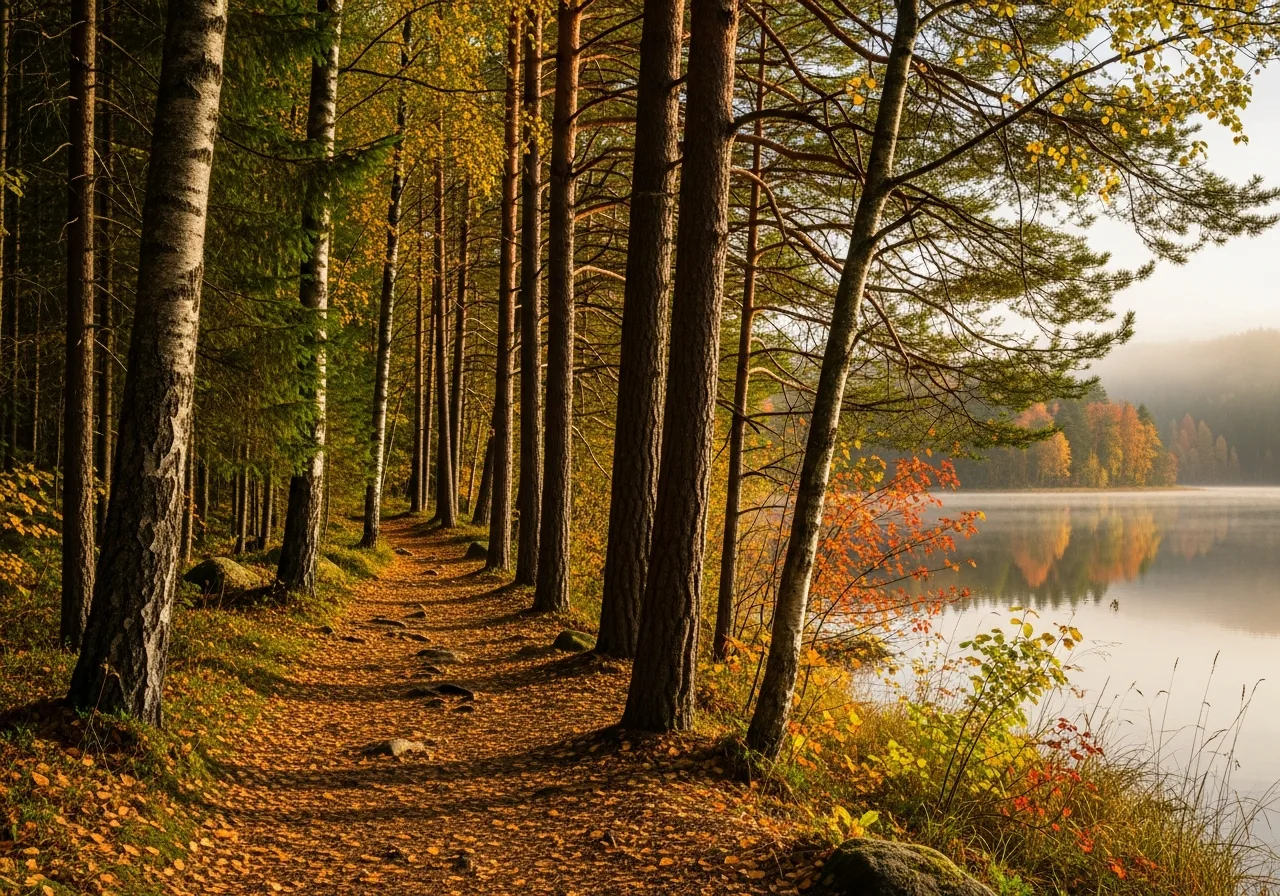
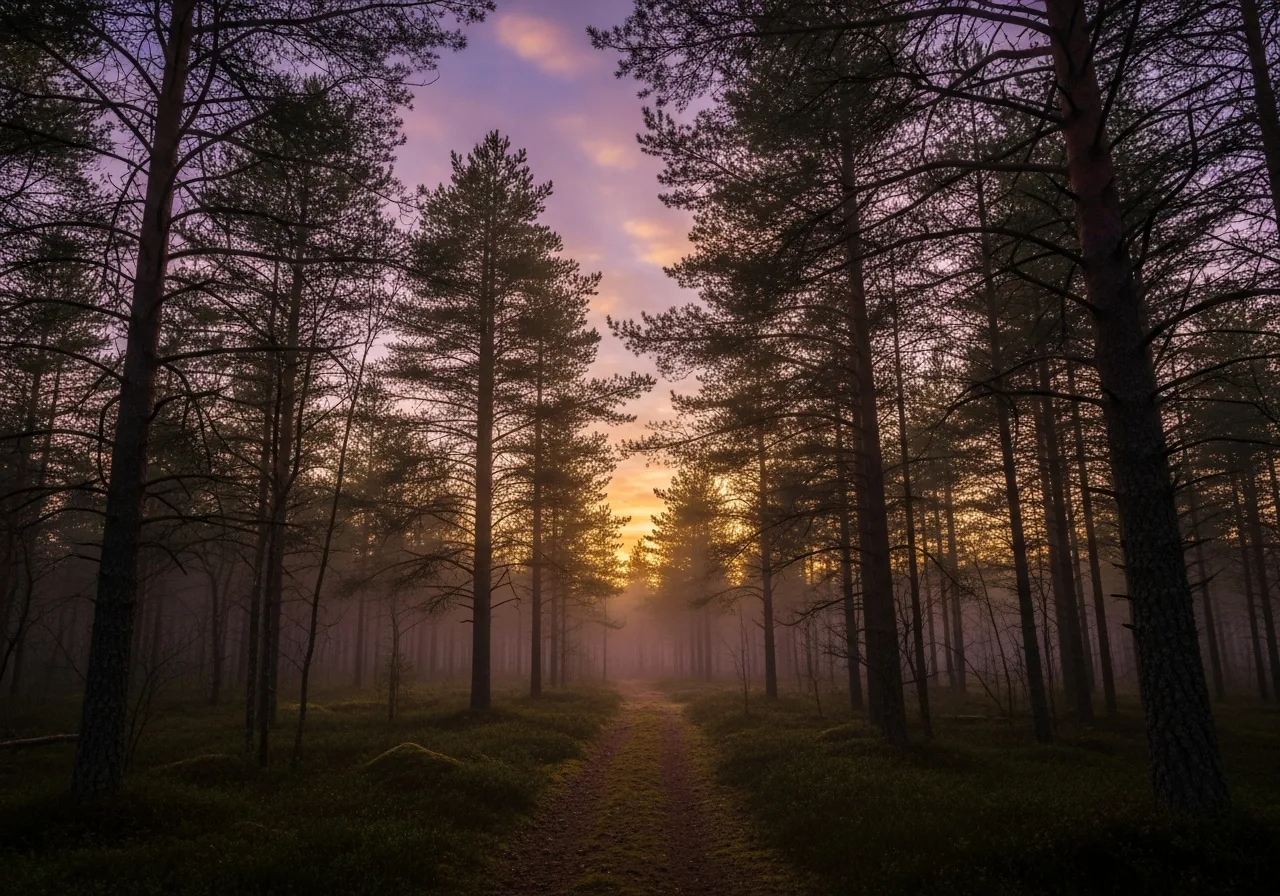
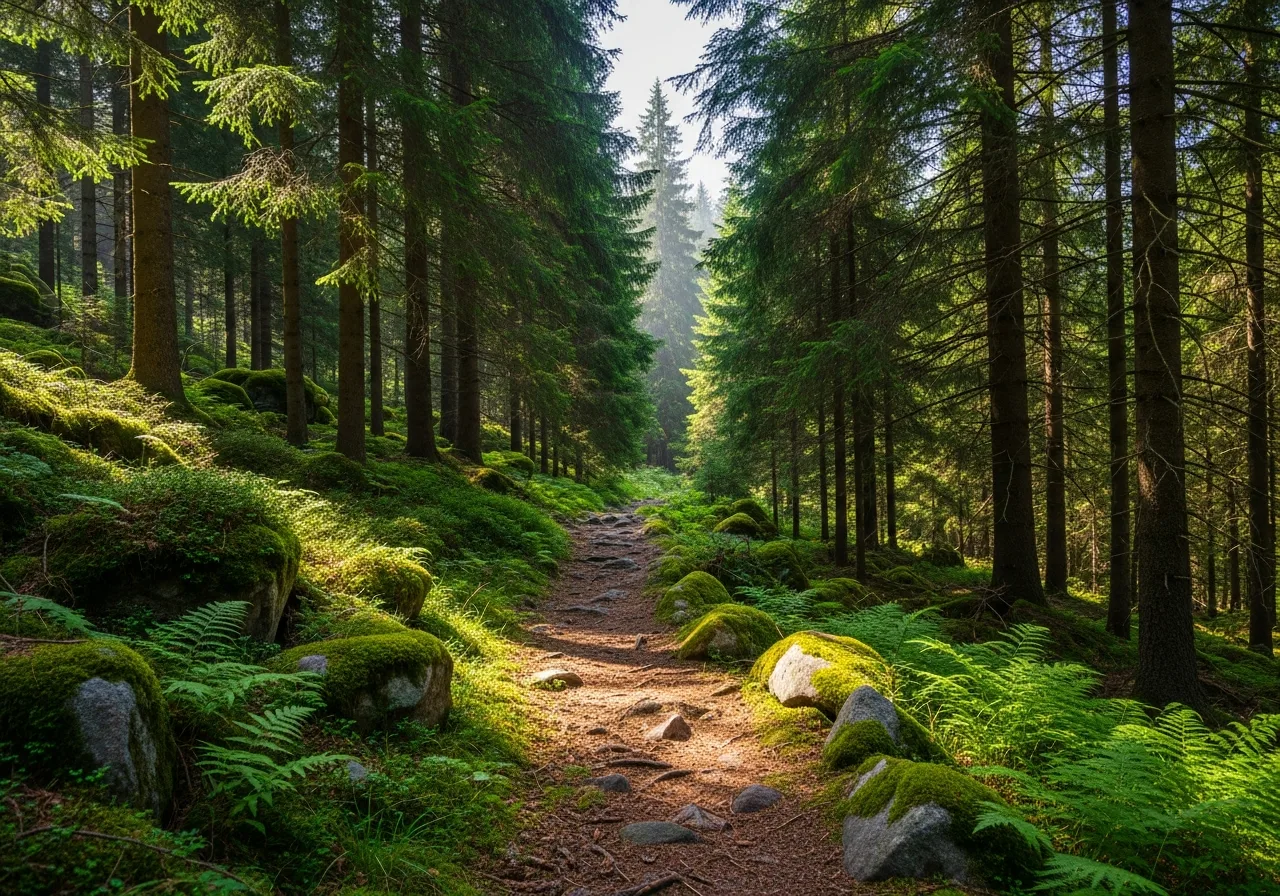
There's a particular quality to a Swedish forest in winter that's hard to describe until you've experienced it. The silence is the first thing you notice — deep, absorbing and almost tangible. Snow muffles every sound. The air is sharp and clean. And the light, when it comes, arrives low and golden, filtering through the trees at angles that make the whole forest glow.
Winter walks in Stockholm's surrounding forests are one of our most popular experiences, and it's easy to understand why. This is the landscape at its most elemental — stripped back, quiet and profoundly beautiful.
The Light
Swedish winter light is unlike anything you'll find further south. In December and January, Stockholm gets around six hours of daylight, and the sun never climbs much above the horizon. The result is a prolonged golden hour — the kind of light that photographers travel the world for, but that Stockholmers get to enjoy every winter day.
In the forest, this low light creates long shadows and dramatic contrasts. Snow-covered branches catch the sunlight and seem to glow from within. On overcast days, the light is soft and even — a blue-grey wash that makes the forest feel infinite. Both moods are beautiful in their own way.
What to Wear
The key to enjoying a winter walk is layering. We recommend a moisture-wicking base layer, an insulating mid-layer (wool or fleece) and a windproof, water-resistant outer layer. Good winter boots with grip are essential — the terrain can be icy, especially on rocky sections and lake edges.
A warm hat, gloves and a scarf or neck gaiter complete the picture. If you're properly dressed, you'll be comfortable in temperatures down to -15°C. We've had guests arrive worried about the cold and leave wondering why they don't walk in winter more often.
Hand warmers (the small disposable packets you activate by shaking) are a useful backup. We carry spares on all our winter walks.
The Forest in Winter
The Swedish forest changes character completely between seasons, and winter reveals structures and details that are hidden during the greener months. Without leaves on the deciduous trees, you can see deeper into the woodland. Rock formations, streams and animal tracks become visible. The forest feels more open, more legible.
Snow transforms everything. A familiar trail becomes something new — the shapes softened, the colours reduced to white, grey, green and brown. Pine trees heavy with snow take on sculptural forms. Frozen lakes become vast, open spaces with views that stretch to the horizon.
Wildlife is more visible too. Deer tracks in the snow, the flash of a red fox, the methodical tapping of a woodpecker — winter slows the forest down and makes its inhabitants easier to spot. We've seen moose, roe deer, hares, and various woodland birds on our winter walks.
Fika in the Snow
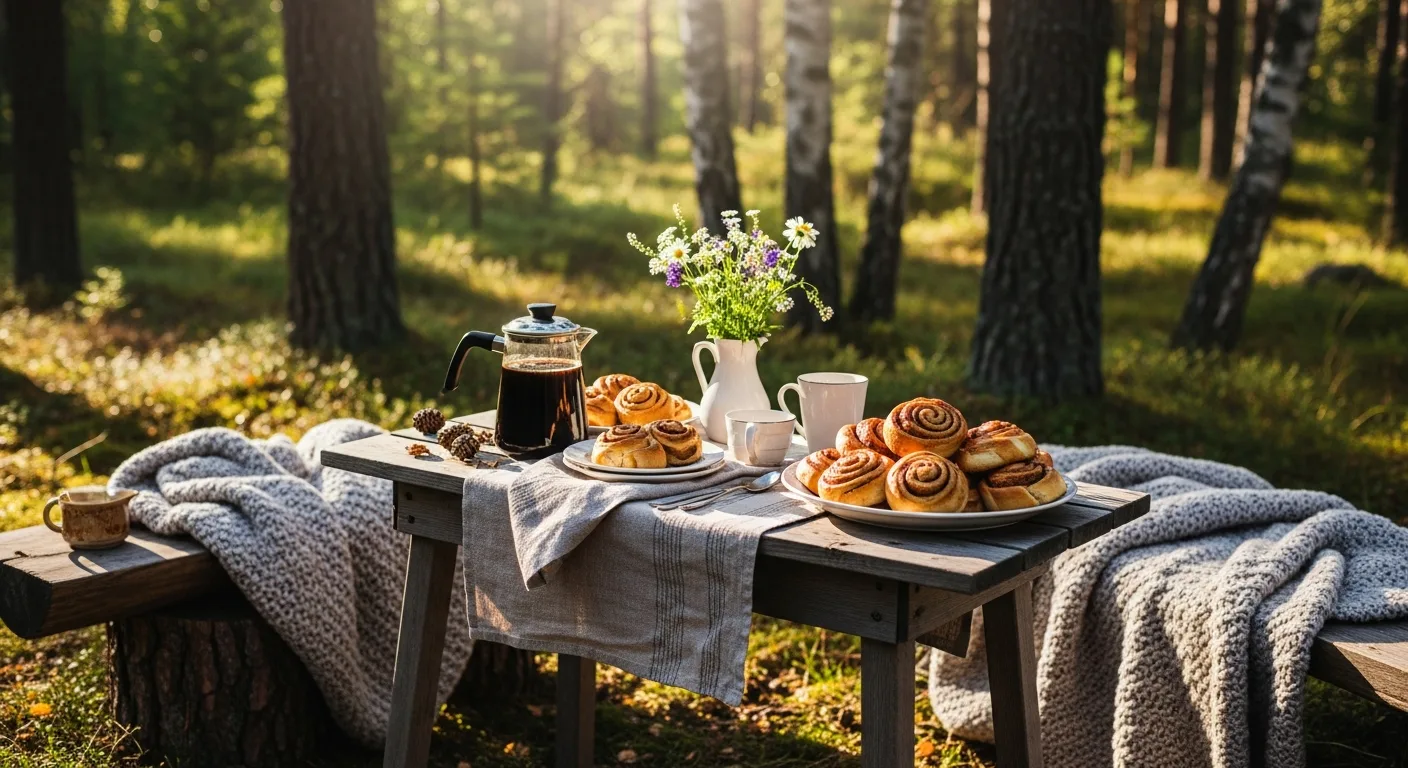
Every walk includes a fika stop — the Swedish tradition of pausing for coffee, something sweet and a bit of conversation. In winter, we set up our fika spot in a sheltered clearing, sometimes around a small fire. There's something deeply satisfying about wrapping your hands around a cup of hot coffee in a snow-covered forest, with the smell of cinnamon buns in the cold air.
This is not just a break — it's an integral part of the experience. Fika is about slowing down, appreciating the moment and connecting with the people around you. In winter, with the quiet forest as your backdrop, it takes on an extra dimension of warmth and cosiness. The Swedes have a word for this feeling: 'mys' (similar to the Danish 'hygge').
Who Is a Winter Walk For?
Winter forest walks are suitable for most fitness levels. We adjust the pace and distance to the group, and our routes are chosen for their beauty rather than their difficulty. The terrain is generally gentle — forest paths, lake edges and meadows — with occasional rocky or uneven sections.
If you've never walked in winter before, or if you're visiting from a warmer climate, this is a wonderful way to experience a side of nature that many people never see. The cold is part of the experience, not an obstacle to it. And by the end of the walk, most guests tell us they feel more alive, more present and more connected to the natural world than they have in months.