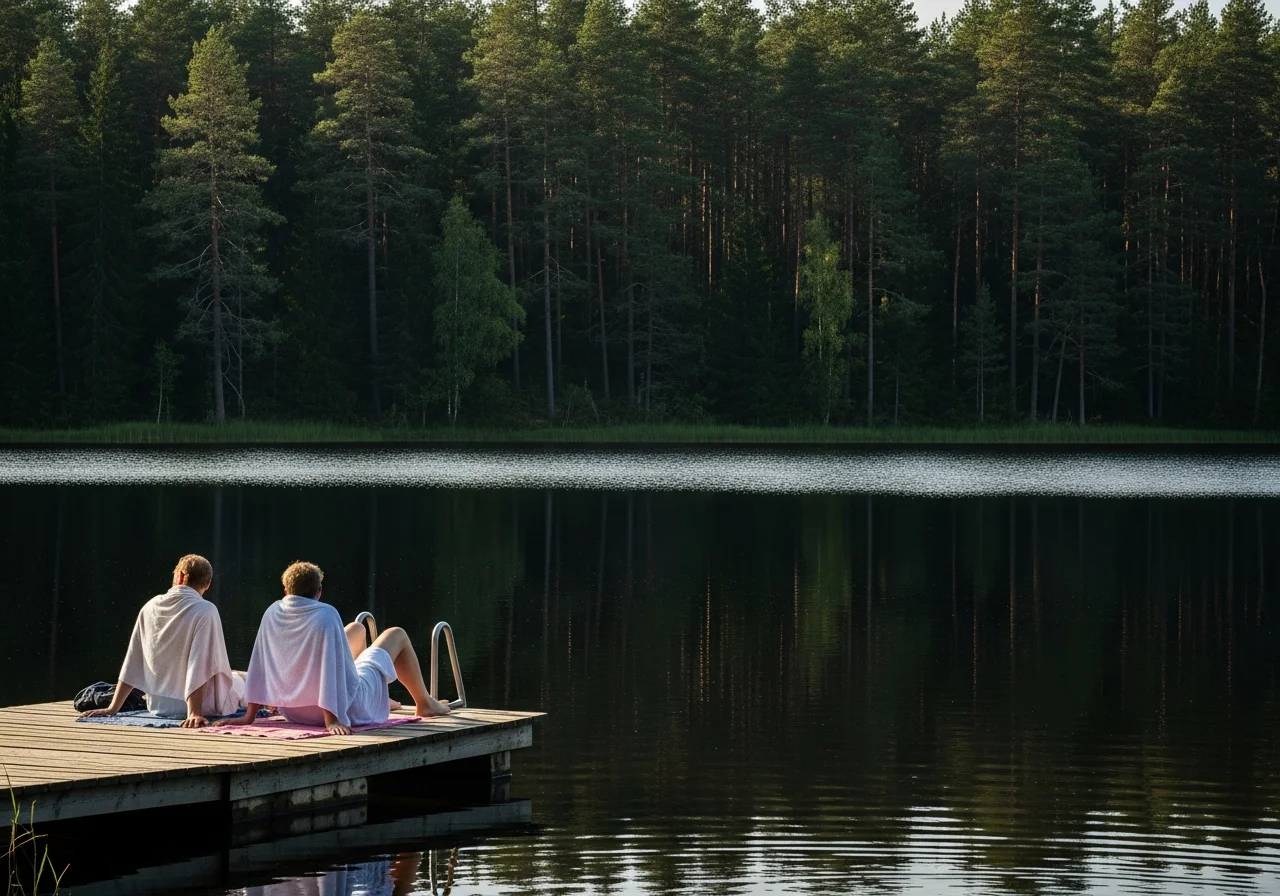
Every winter morning, across Stockholm's lakes and waterfront, small groups of Swedes lower themselves into water that hovers just above freezing. They stay for a minute or two, sometimes less. Then they climb out, skin flushed and breathing hard, and often describe the experience as the best part of their day.
Cold water swimming — 'kallbad' or 'vinterbad' in Swedish — has been practised in the Nordic countries for centuries, but in recent years it has attracted significant scientific attention. The research is catching up with what the Swedes have known intuitively for generations: that regular cold water exposure is genuinely good for you.
What Happens to Your Body
When you enter cold water, your body mounts an immediate stress response. Heart rate and blood pressure spike. Breathing becomes rapid and shallow. Blood vessels in the skin constrict, redirecting blood flow to the core. This is the 'cold shock response', and it's the reason that cold water immersion should always be approached with care.
After the initial shock (which typically lasts 30 to 90 seconds), something remarkable happens. The body begins to adapt. Breathing slows. Heart rate settles. A sense of calm — even exhilaration — begins to emerge. This is partly due to the release of norepinephrine, a neurotransmitter and hormone that sharpens attention, lifts mood and reduces inflammation.
Studies have shown that cold water immersion can increase norepinephrine levels by 200 to 300 percent — a magnitude that's hard to achieve through any other natural means. This surge is likely responsible for the mental clarity and elevated mood that regular cold swimmers report.
Mental Health Benefits
The mental health benefits of cold water swimming are increasingly well-documented. A 2020 review published in the British Journal of Sports Medicine found evidence linking regular cold water exposure to reduced symptoms of depression and anxiety. The mechanism appears to involve both the norepinephrine response and the activation of the vagus nerve — a major pathway connecting the brain to the body's organs.
Vagal tone — a measure of how well the vagus nerve functions — is associated with emotional regulation, stress resilience and overall wellbeing. Regular cold exposure appears to improve vagal tone, essentially training the nervous system to manage stress more effectively.
There's also a psychological dimension. The act of voluntarily entering cold water requires a kind of controlled courage — you choose to do something uncomfortable, you breathe through the discomfort and you emerge feeling stronger. Over time, this builds a sense of agency and resilience that extends well beyond the water.
The Immune System
Several studies have explored the relationship between cold water exposure and immune function. A large Dutch trial (the 'Icebreaker' study) found that participants who took cold showers for 30 days had a 29 percent reduction in sickness absence from work compared to a control group. While the study measured cold showers rather than open water swimming, the principle of cold exposure is similar.
The proposed mechanism involves the stimulation of white blood cell production and the activation of anti-inflammatory pathways. Regular cold exposure may essentially 'prime' the immune system, keeping it in a state of readiness.
How to Start Safely
Cold water swimming is powerful but not without risk. Hypothermia, cold water shock and cardiac stress are real concerns, particularly for beginners. Here are the key principles for safe cold water immersion:
Start gradually. Begin with cold showers at home — 30 seconds at the end of your regular shower — and build up over weeks. When you move to open water, start in autumn so your body can acclimatise as temperatures drop naturally.
Never swim alone. Always have someone on the bank or in the water with you. Keep sessions short — 1 to 5 minutes is plenty for most people, especially in water below 5°C. Get out before you start to feel cold, not after.
Warm up slowly afterwards. Avoid hot showers immediately after — the rapid change in temperature can cause blood pressure to drop dangerously. Instead, dry off, put on warm layers and let your body warm up naturally. A hot drink helps.
On our thermal experiences, we guide guests through cold water immersion as part of the sauna cycle. For an urban option, see our City Swim and Sauna Experience; outdoor swimming is optional and depends on water quality, weather and safety conditions. The context of having been heated in the sauna first makes the cold water more manageable, and the combination of heat and cold creates a physiological response that neither achieves alone.